
Every week we go through the WordPress vulnerabilities that received a CVE the week before and sort out which ones deserve your attention first. This report covers November 2 to 8, 2026.
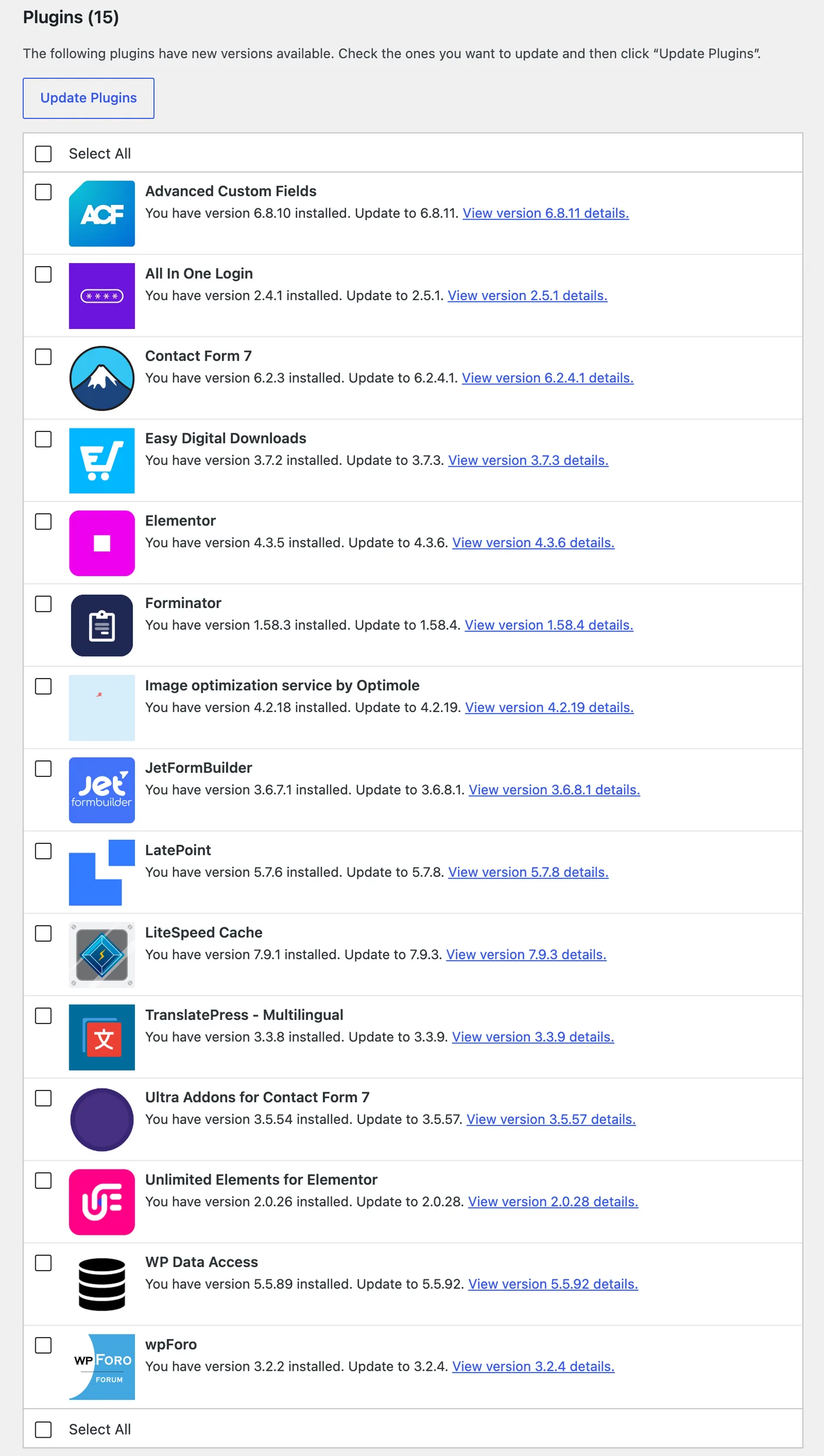
The short version: update Contact Form 7 to 6.2.4.1 and Elementor to 4.3.6. Both run on more than 10 million sites, and Patchstack marks the bugs these releases fix as exploited in the wild. Contact Form 7 6.2 to 6.2.3 let anyone leave a file on the server through a form with an upload field. The Elementor bug needs a logged-in administrator to open a crafted link. Seven more plugins on this week’s list carry the same “known to be exploited” badge. And if you run a WooCommerce shop on LiteSpeed hosting, make sure LiteSpeed Cache is on 7.9.2 or newer: older versions could serve one shopper’s cart and checkout details to the next visitor.
The week in numbers
459 new CVEs were published for WordPress plugins and themes last week, down from 576 the week before. It is still the seventh-biggest week of 2026. The median since January 2024 is 194 a week, and 258 in 2026.
- Severity: 31 critical, 113 high, 287 medium and 28 low (CVSS 3.1 base score from the record). 30 of the 31 critical ones need no login.
- Affected: 298 components: 297 plugins and one theme. No WordPress core record this week; 7.1.4 from last week is still the current release.
- Bug types: cross-site scripting leads with 157 records (34%), followed by broken access control (122), information disclosure (46), privilege escalation (28) and SQL injection (19).
- Sources: Wordfence 164, WPScan 146, Patchstack 139, VulnCheck 9, VulDB 1.
- Fixes: of the 393 records for plugins hosted on WordPress.org, 370 already have a newer release than the last affected version, 10 belong to plugins that WordPress.org has closed and 13 have no newer release. Ten of those 13 use the version numbers of a premium edition (Amelia Pro, Directorist, Download Manager), so the free plugin’s release history doesn’t match them. 66 records are for premium plugins and themes, where the version history isn’t public.
Every record, with search and filters, is in our WordPress vulnerability database, which updates daily from the CVE List.
How we rank them
The CVSS score is a starting point, not the answer. We look at who can reach the bug, what has to be switched on for it to work, what the attacker gets and how many sites run the plugin. None of this changes what to do: every fix below should go in as soon as you can. The ranking tells you where to start, and which sites to look at more closely if they ran an old version for a while.
- Highest risk: anyone can reach the bug, the impact is serious and nothing special has to be switched on, or it is already being exploited.
- High risk: it takes an account, an admin action or an unusual trigger, or the impact is narrower.
- Depends on your setup: only exploitable with a specific option, add-on or site type. If your site matches, treat it as highest risk.
LatePoint is this week’s example. “Authentication bypass without login, 9.1” reads like a site takeover. Read the code and the attacker gets LatePoint customer accounts, with their bookings and contact details, but not administrators: the plugin refuses to change the password of a WordPress account with a higher role. It is still on the highest-risk list, because Patchstack marks it as exploited and nothing has to be switched on. Update it on every site anyway: keeping a site safe shouldn’t depend on knowing which conditions apply.
This week’s shortlist
Update everything on this list now. The groups only show where the risk is highest, so you know where to start.
| Plugin | Bug | Login needed | Fixed in |
|---|---|---|---|
| Contact Form 710,000,000+ installs | File uploadexploited | Noa form with a file field | 6.2.46.2.4.1 is current |
| Elementor10,000,000+ installs | Cross-site scriptingexploited | Noan admin opens a link | 4.3.6 |
| s2Member8,000+ installs | Code executionexploited | NoPayPal set up | 261017not 261001 |
| LatePoint100,000+ installs | Customer account takeoverexploited | No | 5.7.85.7.7 for the record |
| Amelia ProPremium | SQL injectionexploited | No | 9.9.2free plugin: 2.4.13 |
| Affiliate Program Suite (SliceWP)10,000+ installs | SQL injectionexploited | No | 1.2.15 |
| SureCart80,000+ installs | Account takeoveradministrators too | No | 4.9.6since October 15 |
| wpForo Forum20,000+ installs | SQL injectionand forum admin for members | No | 3.2.3 |
| Optimole200,000+ installs | Stored cross-site scripting3 records | No | 4.2.19 |
| Strong Testimonials80,000+ installs | Stored cross-site scripting | Noruns in an admin preview | None confirmed3.3.17 is current |
| Forminator600,000+ installs | Stored cross-site scriptingand 2 more | Subscriber | 1.58.4 |
| LiteSpeed Cache7,000,000+ installs | Shoppers’ data leak | NoWooCommerce on a LiteSpeed server | 7.9.2 |
| All In One Login60,000+ installs | Account takeoveradministrators too | NoEmail OTP login on | 2.5.0 |
| Easy Digital Downloads40,000+ installs | Administrator takeover | NoPayPal and guest checkout | 3.7.3 |
| Ultra Addons for Contact Form 760,000+ installs | File deletionexploited | NoPDF Generator on | 3.5.55 |
| WP Data Access10,000+ installs | Table rows changedexploited | Noa public Data App with write access | 5.5.905.5.92 for 5 more |
| ACF Extended PROPremium | Code executionexploited | Noshortcode preview on a form | 0.9.2.70.9.2.8 recommended |
| JetFormBuilder80,000+ installs | Privilege escalationand 6 more | Noan admin verifies a held submission | 3.6.8.1 |
| Advanced Custom Fields2,000,000+ installs | Stored cross-site scripting | Nocomment form fields that save custom values | 6.8.11 |
| TranslatePress, iubenda, Optimoleup to 400,000+ installs | Stored cross-site scriptingthrough comments | Noopen comments | 3.3.9, 3.13.7, 4.2.19 |
| MC4WP and The Events Calendar1,000,000+ and 600,000+ | Shortcodes from visitor input | Noa specific form or template setup | 4.15.0 and 6.18.3.1 |
| WP Fastest Cache1,000,000+ installs | Password leak | Nomultisite with open registration | 1.5.4 |
| Duplicator1,000,000+ installs | SQL injection during a restore | Subscribera restore to another database server | 5.1.05.1.1 recommended |
Highest risk
Contact Form 7 6.2 to 6.2.3: rejected uploads that stayed on the server
10,000,000+ installs · CVSS 9.8 · CVE-2026-114432 (WPScan) · fixed in 6.2.4 · known to be exploited
Contact Form 7 checks every uploaded file against the form’s allowed types and size limit. In 6.2, released on October 6, the order changed: the file went into the plugin’s temporary upload folder first, and a file that then failed the check was never deleted. WPScan rates it 9.8 because on some servers such a file can run as code: Apache setups that ignore the folder’s .htaccess protection, list directory contents and run .phar files as PHP. On other servers the attacker can still leave an HTML or SVG file on your domain. Patchstack marks it as exploited.
Only forms with a file upload field are affected, so the default “Contact form 1” is not. And only sites on a recent stack ever received 6.2: it requires PHP 8.3 and WordPress 7.1, and older sites stayed on 6.1.x, which isn’t affected. The vulnerable releases were current for 23 days, until Contact Form 7 6.2.4 on October 29. 6.2.4.1 followed the same day with a fix for an unrelated regression.
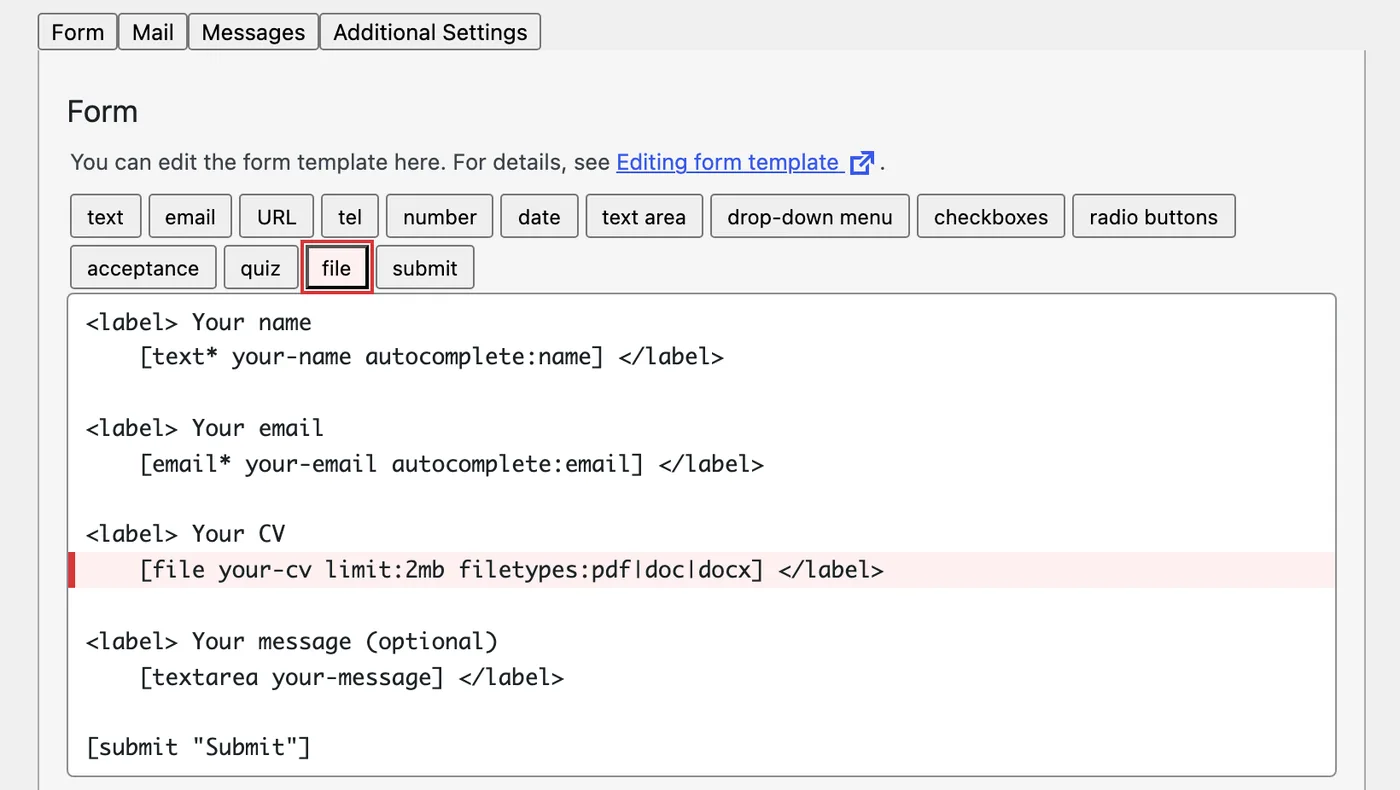
One side effect to know before you update: 6.2.4 keeps the original name only for media, PDF and text files. Files with other extensions, such as .docx or .zip, get renamed on upload unless you add the extension back with the wpcf7_file_extension_safelist filter.
Update now, to 6.2.4.1. If a site ran 6.2 to 6.2.3 with an upload form, look in wp-content/uploads/wpcf7_uploads for files you don’t recognize, especially .phar, .php, .html or .svg, and delete them.
Elementor 4.3.5 and older: an exploited script that needs one click
10,000,000+ installs · CVSS 7.1 · CVE-2026-109884 (Patchstack) · fixed in 4.3.6 · known to be exploited
Patchstack published three Elementor records on November 4 and 7 and marks one of them, a cross-site scripting bug without login, as exploited in the wild. It isn’t a script waiting on a public page: the attacker has to get a logged-in administrator or editor to open a crafted link, and the script then runs with that person’s rights. That is enough to create an administrator account or install a plugin. Patchstack names no widget or screen. The 4.3.6 changes harden several values that admin screens take from the page address, which fits an attack through a link.
The second record (CVE-2026-109883) is the same kind of bug, and the third (CVE-2026-120850) lets a Contributor store a script. 4.3.6, released on November 2, fixes all three. 4.3.5 came out after the first two were reported and is still affected.
Update now. Until every site is on 4.3.6, be wary of links to admin pages that arrive by email or chat.
s2Member 261011 and older: code execution through the PayPal notification
8,000+ installs · CVSS 9.8 · CVE-2026-86596 (Wordfence) · fixed in 261017 · known to be exploited
s2Member receives PayPal’s payment notifications at a public address and fills values from them, such as the item name, into templates for confirmation emails and tracking codes. According to Wordfence, an anonymous attacker could get PHP code run on the server through the item name. The code is in the free plugin, so no Pro add-on is needed, and it is reached on sites that have PayPal set up in s2Member. Patchstack marks it as exploited.
The record names 261001 as the fix, but the code says otherwise. The affected files are unchanged in 261001 and 261011, Wordfence notified the vendor on October 14, and the fix arrived in 261017 on October 17: from that version, values inserted into a template are never read as template codes again.
Update now, to the current 261106. If the site sold memberships through PayPal on an older version, look for administrator accounts and PHP files you don’t recognize.
LatePoint 5.7.6 and older: exploited again, this time the customer accounts
100,000+ installs · CVSS 9.1 · CVE-2026-118066 (Wordfence) · fixed in 5.7.7 · known to be exploited
LatePoint has come up in five of the last six reports. This time an anonymous visitor could reset a booking customer’s password and log in as that customer, with access to their bookings, orders and contact details. No setting is needed, and Patchstack marks it as exploited.
It stops short of administrators. With “Use WordPress users as customers” on, the linked WordPress account can be taken over too, but LatePoint refuses the password change for any account with a role beyond subscriber or customer. 5.7.7 (November 2) blocks the two known routes, and 5.7.8 (November 3) closes the database query weakness behind them. The same releases fix a stored script through the customer email field (CVE-2026-119152).
Update now, to 5.7.8. If a site ran 5.7.6 or older, take customer reports of unexpected password resets seriously.
Amelia Pro 9.9.1 and older: SQL injection in the public event list
Premium · CVSS 7.5 · CVE-2026-116751 (Wordfence) · fixed in 9.9.2 · known to be exploited
The record covers the premium Amelia, versions 4.0 to 9.9.1. The public endpoint that lists events built a database query from the tag filter in a way that let anyone read the database without logging in, slowly, one guess at a time. Patchstack marks it as exploited. Amelia Pro 9.9.2 (November 4) fixes it, along with a second record (CVE-2026-107616): any customer account, which Amelia creates for everyone who books, could export the attendee list of any event, with names, emails, phone numbers and payment details.
The free Amelia on WordPress.org uses 2.x version numbers, so the records don’t name it. It had the same query code until 2.4.13 (October 22), and the attendee export doesn’t exist in it. The current free release is 2.4.14, the version last week’s report recommended.
Update now: Pro to 9.9.2 through the plugin’s own updater, the free plugin to 2.4.14.
Affiliate Program Suite (SliceWP) 1.2.14 and older: exploited SQL injection
10,000+ installs · CVSS 7.5 · CVE-2026-120043 (Wordfence) · fixed in 1.2.15 · known to be exploited
SliceWP runs affiliate programs: sign-ups, referral tracking and commissions. Its customer lookup put an email address from the request into a database query without escaping it, and according to Wordfence anyone could use that to read the database without logging in. Patchstack marks it as exploited. 1.2.15 (November 5) escapes that value and two date filters and only accepts known columns for sorting. The changelog calls it “Variable escaping”.
Update now, to 1.2.15. On sites that stayed on 1.2.14 or older, treat the affiliate and customer details in the database as exposed.
SureCart 4.9.5 and older: any account through the login code
80,000+ installs · CVSS 8.1 · CVE-2026-120574 (Wordfence) · fixed in 4.9.6
SureCart lets customers sign in with a one-time code sent by email. Up to 4.9.5, an anonymous attacker could keep guessing that six-digit code, and according to Wordfence the rate limit could be sidestepped by switching IP addresses. Code login worked for every account, administrators included, so a correct guess meant the whole site. No setting is needed.
The fix isn’t new: 4.9.6 came out on October 15, two weeks before Wordfence published. It stops code login for administrators, editors and shop managers and locks an email address after five wrong codes, and later releases added more limits. The record lists no fixed version; the changelog and the code show 4.9.6. A Patchstack record from week 43 (CVE-2026-112241) with the same range and fix may describe the same bug.
Update now. The current release is 4.12.1. On shops that stayed on 4.9.5 or older after mid-October, check the user list for administrators you don’t know.
wpForo Forum 3.2.2 and older: SQL injection without login
20,000+ installs · CVSS 7.5 · CVE-2026-119155 (Wordfence) · fixed in 3.2.3
wpForo’s board lookup put a visitor-supplied language value into a database query without escaping it. The security token the request needs is printed on every forum page, so anyone could read the database through it, slowly, email addresses and password hashes included. No setting is needed. 3.2.3 (November 1) builds the query safely.
The same release fixes a privilege escalation for members (CVE-2026-119164): a member with three approved posts could add themselves to the forum’s Admin group, which controls forum permissions and other members’ content. A second SQL injection record (CVE-2026-95870) needs a custom checkbox field on topics, which wpForo doesn’t add on its own, and was already fixed in 3.2.0 in September.
Update now, to 3.2.4. Then review who is in your forum’s Admin and Moderator groups.
High risk
Optimole 4.2.18 and older: three scripts without login
200,000+ installs · CVSS 7.2 · CVE-2026-120739, CVE-2026-120677 and CVE-2026-119070 (Wordfence) · fixed in 4.2.19
Optimole rewrites image addresses on your pages so they load from its CDN. Three records show values passing through that rewrite and coming out as script. The worst (CVE-2026-120739) needs no comment and no special setting: the page profiler, on by default, accepted image size values from visitors that were stored and later printed into pages. The other two arrive through comments, one in any published comment, the other in an approved comment on a post with an embedded video.
Update now, to 4.2.19 (November 4). 4.2.18 fixed only the first of the comment bugs.
Strong Testimonials 3.3.16 and older: a script in the review queue
80,000+ installs · CVSS 7.2 · CVE-2026-115811 (Wordfence) · no fixed version listed
Strong Testimonials has a public form for submitting testimonials. According to Wordfence, the star rating sent through that form could carry a script that runs when an administrator opens the preview of the pending testimonial. Reviewing submissions is exactly when an administrator opens it.
The record lists every version up to 3.3.16 and no fix. The code doesn’t quite match: 3.3.16 (October 27, four days after Wordfence notified the vendor, changelog “Security issue”) already forces the rating to a whole number, and 3.3.17 (November 2) has no security changes. Either the record’s range is one version too wide, or the 3.3.16 fix is incomplete.
Update to 3.3.17. Until the vendor confirms a fix, don’t preview pending testimonials from senders you don’t recognize. Delete them instead.
Forminator 1.58.3 and older: a stored script for Subscribers
600,000+ installs · CVSS 6.5 · CVE-2026-115952 and 2 more (Patchstack) · fixed in 1.58.4
Patchstack lists three Forminator records: stored cross-site scripting for Subscribers, which it rates medium priority, and content injection for Subscribers and an access control bug without login, both rated low. There are no technical details, and the changelog only says “Security hardening”. The 1.58.4 code stops submitted values from being read as merge tags in emails and checks the approver’s permissions before a manually approved account is created. Forminator sites often run registration forms, so Subscriber accounts are common.
Update now, to 1.58.4, on WordPress.org since November 2.
Depends on your setup
LiteSpeed Cache 7.9.1 and older: one shopper’s checkout, served to the next
7,000,000+ installs · CVSS 8.2 · CVE-2026-93389 (Wordfence) · fixed in 7.9.2
WooCommerce’s block-based cart and checkout load their data through the Store API, a set of REST API addresses. LiteSpeed Cache caches REST API responses by default, and up to 7.9.1 that included these. A later anonymous visitor could receive another shopper’s cart: name, address, email, phone number, the items, and the token that identifies the cart session.
It only affects WooCommerce shops where LiteSpeed’s page cache actually runs, which means a LiteSpeed or OpenLiteSpeed web server or the QUIC.cloud CDN. Sites without WooCommerce are not affected. 7.9.2 (October 20) never caches the Store API, whatever the setting says, and last week’s report already recommended it for two other bugs.
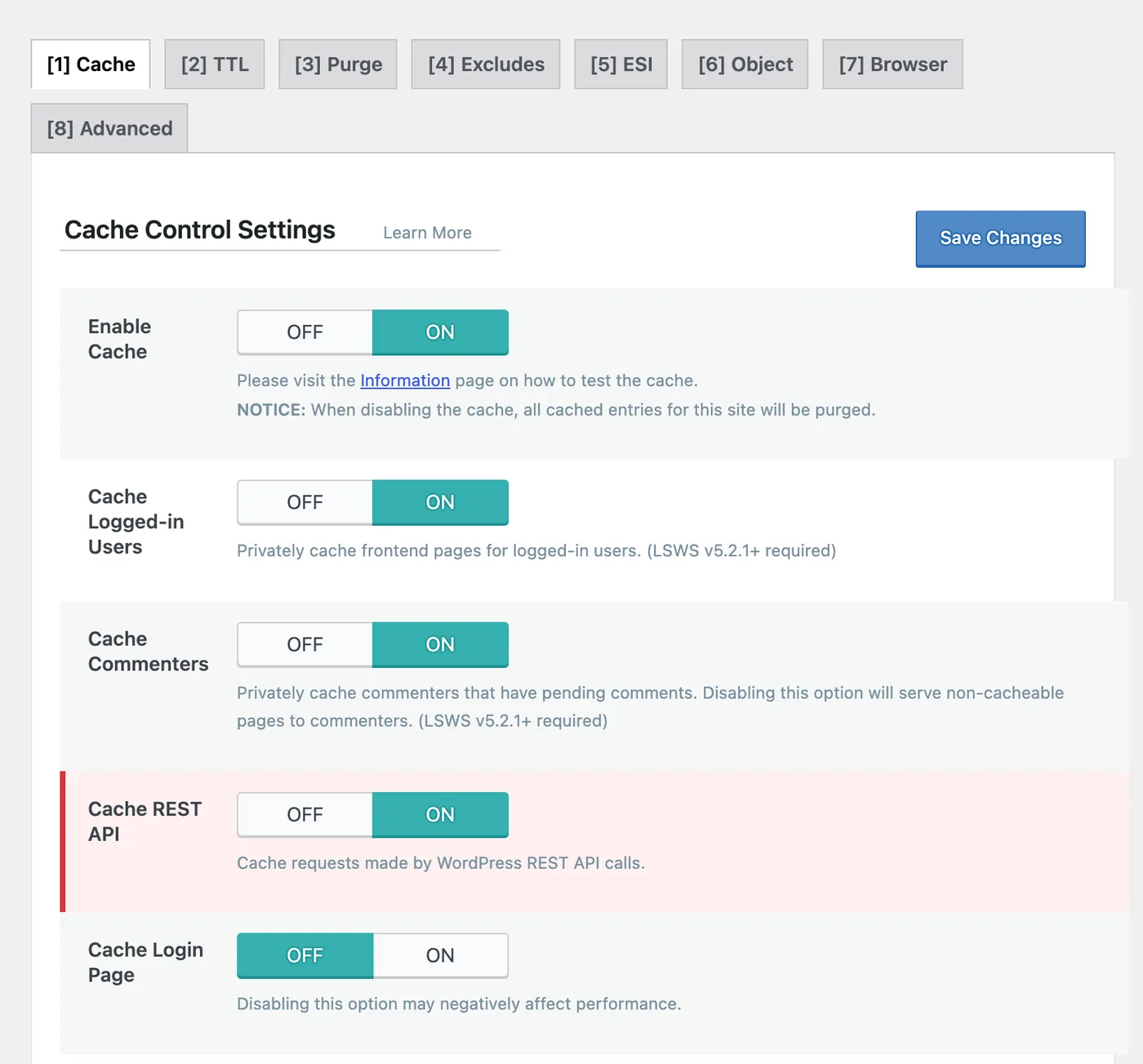
Update now, then purge the LiteSpeed cache so old entries are gone.
All In One Login 2.4.0 and 2.4.1: login codes that could be guessed
60,000+ installs · CVSS 9.8 · CVE-2026-19256 (WPScan) · fixed in 2.5.0
All In One Login, formerly Change wp-admin Login, added passwordless “Email OTP Login” in 2.4.0 in June. That release switched it on by default with a four-digit code, and the code could be guessed for any account, administrators included. 2.4.1 in August turned the default off and moved to six digits, but only for new installs: sites that had run 2.4.0 kept the feature on. The 2.4.1 changelog already listed a fix for an account takeover through email codes, so 2.5.0 (October 26) is the second attempt. It adds lockouts and switches the feature off where it still runs with the old four-digit settings.
Update now. Then open the plugin’s Passwordless Authentication settings, check whether Email OTP Login is on and decide whether you want it. If it was on, look at the user list for administrators you don’t know.
Easy Digital Downloads 3.6.9 to 3.7.2: an administrator login after a PayPal payment
40,000+ installs · CVSS 8.1 · CVE-2026-120538 (Wordfence) · fixed in 3.7.3
After a PayPal payment, Easy Digital Downloads logs the buyer in. Up to 3.7.2 it looked the account up by the email address on the order, so a guest who paid with an administrator’s email address was logged in as that administrator, as long as the administrator had no customer record in the store. It needs PayPal as an active gateway and guest checkout, which is the default, and the attacker has to complete a real payment, which leaves a trail.
Wordfence published on October 30, three days before a fix existed. 3.7.3 came out on November 2 and only logs in the user who started the order. The record says every version up to 3.7.2 is affected, but the code involved arrived in 3.6.9 in June.
Update now if you sell through PayPal. Then look at the user list, and at recent guest orders paid with your team’s email addresses.
Ultra Addons for Contact Form 7 3.5.54 and older: exploited file deletion
60,000+ installs · CVSS 9.8 · CVE-2026-102435 (Wordfence) · fixed in 3.5.55 · known to be exploited
Ultra Addons adds features to Contact Form 7, among them a PDF generator that turns a submission into a PDF. Form values went into the PDF engine unfiltered, which let an anonymous visitor delete any file the web server can write. Deleting wp-config.php puts a site back into its installer, which is how deletion bugs usually turn into a takeover. Patchstack marks it as exploited.
It needs the PDF Generator, which is off by default and has to be switched on twice: under UACF7 Addons → Addons Settings, and in the form’s own PDF Generator tab. 3.5.55 came out on October 10.
Update now, to 3.5.57, which also fixes a stored script without login.
WP Data Access 5.5.89 and older: exploited through public data apps
10,000+ installs · CVSS 8.1 · CVE-2026-118267 (Wordfence) · fixed in 5.5.90 · known to be exploited
WP Data Access builds “Data Apps”: tables and forms over database tables that can be published on the site. When an app let visitors add, change or delete rows, they could change or delete any row of that table, not only the ones the app’s filter showed. On an app built on the WordPress users table, that includes an administrator’s password. Patchstack marks it as exploited.
Without a public app that allows anonymous writes, it takes a Subscriber account and an app that gives Subscribers write access. 5.5.90 (October 28) enforces the app’s filter, and 5.5.90 and 5.5.91 fix five more records from this week, among them a SQL injection for Subscribers (CVE-2026-121536).
Update now, to 5.5.92, and review which apps accept anonymous data entry. Since 5.5.89 the App Manager shows a warning for them.
ACF Extended PRO 0.9.2.6 and older: an August fix, exploited now
Premium · CVSS 9.8 · CVE-2026-120534 (Wordfence) · fixed in 0.9.2.7 · known to be exploited
The CVE appeared on November 3, but the fix shipped on August 27. ACF Extended PRO’s Forms module can preview a form’s shortcode. With that per-form option on, an anonymous visitor could make the Dynamic Render field call PHP functions of their choice. The same worked on servers without OpenSSL, where the encryption of the form’s settings falls back to plain encoding. Patchstack marks it as exploited.
Update now, to 0.9.2.8 (October 19), which also fixes two more PRO bugs without login (CVE-2026-94268 and CVE-2026-94263). The free ACF Extended isn’t listed, but it received related form fixes in the same versions, so keep it on 0.9.2.8 too.
JetFormBuilder 3.6.8 and older: privileges borrowed from the admin who verifies
80,000+ installs · CVSS 9.8 · CVE-2026-119481 (Patchstack) and 6 more · fixed in 3.6.8.1
JetFormBuilder can hold a submission until the sender confirms their email address, and an administrator can verify it by hand. Up to 3.6.7.1, manual verification replayed the held submission’s actions as the administrator, so actions such as registering a user ran with administrator rights instead of the visitor’s. 3.6.8 (October 30) replays them as the original sender.
Six more records need their own form setups, among them two stored scripts without login: one through a Form Record preset (CVE-2026-111317), one through a Calculated Field that reads post meta (CVE-2026-119183). 3.6.8.1 (November 6) covers all seven.
Update now. If you used manual verification, review the users created or changed through verified submissions.
Advanced Custom Fields 6.8.10 and older: custom values on the comment form
2,000,000+ installs · CVSS 7.5 · CVE-2026-110813 (WPScan) · fixed in 6.8.11
ACF fields can appear on public forms, most often the comment form. Checkbox, radio button and select fields can let the visitor add a choice of their own, and an extra option saves that choice into the field’s settings for next time. Up to 6.8.10, such a value could change the field’s stored settings and add an HTML attribute to it, so a script ran for everyone who saw the field afterwards.
It needs a field group on the comment form, or on a theme’s front-end form, with one of those fields and its save option on: “Allow Custom Values” with “Save Custom Values”, “Allow Other Choice” with “Save Other Choice”, or “Create Options” with “Save Options”. That combination is rare. 6.8.11 (November 2) fixes it in ACF and ACF PRO, along with about ten other security issues.
Update now.
Comment scripts, week five: TranslatePress, iubenda and Optimole
400,000+ and 200,000+ installs · CVSS 7.2 · CVE-2026-119167, CVE-2026-120537, CVE-2026-120540 and more · fixed in 3.3.9, 3.13.7 and 4.2.19
The wave of scripts through comments continues. These plugins process the text of a page after WordPress renders it, and comments are part of that text:
- TranslatePress 3.3.8 and older collects strings for translation and rewrites links. A comment could get a script into the translated page or into the plugin’s AJAX responses. It needs a second language. Fixed in 3.3.9 (November 3).
- iubenda 3.13.6 and older parses the page to block cookies before consent (“Native Blocking”, on by default). A comment could carry markers that the parser turned into a working script. The two records (CVE-2026-86606 and CVE-2026-120540) are most likely the same bug. Fixed in 3.13.7 (November 2).
- Optimole: two of its three records arrive through comments, see above.
All of them need open comments. With WordPress’s default “Comment author must have a previously approved comment”, the attacker’s first comment has to be approved by you. Update now, and if a site ran one of these with open comments, look through recent comments for strange markup.
Shortcodes from visitor input: MC4WP and The Events Calendar
1,000,000+ and 600,000+ installs · CVE-2026-118166 (WPScan) and CVE-2026-123469 (Patchstack) · fixed in 4.15.0 and 6.18.3.1
Two plugins ran text from visitors as shortcodes. In MC4WP, a form whose HTML includes a value from the request, such as {data key=...} or {current_url}, read that value again as a shortcode when the form was placed with the Mailchimp form block instead of the [mc4wp_form] shortcode. In The Events Calendar, a visitor’s search text could reach shortcode processing on calendars that use “Default Page Template” under Events → Settings → Display. New installs, block themes and Elementor sites use the plugin’s own template instead. How much harm a shortcode can do depends on what your other plugins register.
MC4WP 4.15.0 (November 3) also stops visitors from subscribing addresses to other audiences in your Mailchimp account (CVE-2026-118167 and CVE-2026-27356, one bug with two numbers). Clear your page cache after updating. The Events Calendar 6.18.3.1 (November 5) also fixes a stored script for Contributors.
Update now, both of them.
WP Fastest Cache 1.5.3 and older: new users’ passwords in the cache
1,000,000+ installs · CVSS 5.9 · CVE-2026-111464 (Wordfence) · fixed in 1.5.4
On a multisite network in subdirectory mode that lets visitors register users and sites, the activation page shows the new user’s username and password. WP Fastest Cache cached that page, so the next visitor saw the login details of the last user who activated. 1.5.4 (November 2) never caches activation pages. 1.5.5 rolled back a broader change from 1.5.4 but keeps this fix. Single sites are not affected.
Update now, then use Delete Cache. On an affected network, ask users who activated recently to change their passwords.
Duplicator 5.0.6 and older: the installer inside your backups
1,000,000+ installs · CVSS 4.8 to 5.8 · CVE-2026-115262 and 2 more (WPScan) · fixed in 5.1.0
Three records for the installer that Duplicator packs into every backup. The one to know: during a restore onto a database server that lacks the source’s character set or collation, the installer rewrote queries in a way that let a value a Subscriber had stored in their profile change the restored database (CVE-2026-115262). Moves between MySQL 8 and MariaDB are the typical case. The other two are a path disclosure in 5.0.0 to 5.0.6 and a script that runs when an administrator opens a crafted link to the log page.
5.1.0 (October 27) fixes all three, and 5.1.1 (November 3) fixes a bypass of the installer password that has no CVE yet. As we wrote in week 43, backups made with older versions carry the older installer.
Update now, to 5.1.1, and make fresh backups.
Back from last week
Several plugins from last week’s report got new records this week. If you followed last week’s advice:
- Jupiter X Core: 4.62.0 isn’t enough anymore. Three new records without login, a stored script through the Raven register form, a limited file download and an information leak, have no fix yet, and 4.62.0 (October 22) is the current release.
- GiveWP: 4.19.0.2 isn’t enough anymore. 4.19.1.1 (November 3) fixes a privilege escalation for the GiveWP Manager role (CVE-2026-118193): a manager could make new donor accounts Editors or Administrators through the default user role setting or a settings import.
- Strong Testimonials, The Events Calendar and Amelia: see above.
- Ultimate Member: 2.14.2 (November 2) fixes a stored script for Subscribers through custom textarea profile fields (CVE-2026-116621).
- WP User Manager: 2.10.0 isn’t enough anymore. 2.10.5 (November 1) fixes an access control bug without login (CVE-2026-121575) and a stored script for Subscribers.
- WP Visitor Statistics: 8.8 isn’t enough anymore. Another stored script without login (CVE-2026-111370) is fixed in 8.9.1 (November 4).
- Greenshift: go to 13.2.3 (November 4) for two records without login, a script through the comment author URL (CVE-2026-119218) and an information leak (CVE-2026-120520).
- Motors: 1.4.127 isn’t enough anymore. 1.4.129 (October 30) fixes a file deletion for Subscribers (CVE-2026-116617) and three more records. Wp Social needs 3.2.4 for a CSRF in its settings (CVE-2026-122675).
- Uncanny Toolkit for LearnDash: 3.8.3 from last week also fixes a privilege escalation rated 9.8 (CVE-2026-65555) in the Front End Login module, and Patchstack now marks last week’s login bypass for unapproved accounts (CVE-2026-119096) as exploited. If a site isn’t on 3.8.3 yet, update it now.
- Spectra, Royal Elementor Addons, Enable Media Replace, User Frontend and LearnPress have new records too, but the versions from last week cover them. Nothing more to do.
Also on the list
Smaller install bases or narrower conditions, but if you run one of these, update it too.
- WPForms 2.0.3 and older (5,000,000+): a reflected script without login, only on forms whose confirmation message or description uses a field value smart tag (CVE-2026-54851). Fixed in 2.0.3.1.
- Polylang 3.9 and 3.9.1 (900,000+): Contributors could copy the custom fields of private posts into a translation of their own (CVE-2026-122670). The record names 3.9.1 as the fix, but 3.9.1 only changed some flags. The fix is in 3.9.2, released today.
- Redux Framework 4.5.16 and older (900,000+): five records for Subscribers, among them an export of the whole options panel, but only where a theme adds Redux fields to the user profile. Fixed in 4.5.17. Themes that bundle their own copy of Redux need a theme update.
- Fluent Forms 6.2.16 and older (800,000+) and SureForms 2.13.0 and older (500,000+): access control bugs without login that Patchstack rates low impact (CVE-2026-120858 and CVE-2026-120842). Fixed in 6.2.17 and 2.13.1.
- Meta Box 5.15.3 and older (500,000+): two records for Contributors, a data leak through field searches and a stored script (CVE-2026-120836 and CVE-2026-123472). Fixed in 5.15.4.
- MetForm 4.3.3 and older (500,000+): Contributors could create forms (CVE-2026-120847), fixed in 4.3.4. Two more things about that update: 4.3.3 wrote every form submission into the PHP error log, so check
wp-content/debug.logif logging is on, and 4.3.4 moves “Required Login” and “Entry Limit” to MetForm Pro, so a free-only form that relied on them accepts anonymous submissions after the update. - Unlimited Elements for Elementor 2.0.26 and older (300,000+): a script through the RSS Feed widget when it shows a feed someone else controls (CVE-2026-116558), and a reflected script (CVE-2026-62007). The advisory names 2.0.27, which never appeared on WordPress.org. Update to 2.0.28.
- Download Manager (90,000+): the record uses premium version numbers (“7.5.9 and older”), but the free plugin is affected too. With open registration, a failed sign-up could put a script into the first administrator’s name (CVE-2026-119156). Fixed in free 3.3.75.
- CTX Feed (Product Feed Manager for WooCommerce) (90,000+): Shop Managers could run PHP through Custom Template 2 feeds (CVE-2026-87964). 8.0.27 removed that code from the free plugin in September, and the vendor ties the CVE to 8.0.42 (November 5), which matters if you also run CTX Feed Pro.
- Import and export users and customers 2.5.11 and older (70,000+): privilege escalation for users with a custom role (CVE-2026-120554). Fixed in 2.5.12.
- WP Event Manager 3.4.1 and older (20,000+): in 3.4.0 and 3.4.1, unpublished posts could be read and overwritten without login (CVE-2026-86442), and Subscribers could take over posts (CVE-2026-16304). Fixed in 3.4.2.
- Stored scripts without login in form and directory plugins: Form Maker 1.15.50 and older (30,000+, fixed in 1.15.51), WS Form LITE 1.12.18 and older (10,000+, 1.12.19), GeoDirectory 2.8.200 and older (10,000+, 2.8.201) and Link Library 7.10.0 and older (10,000+, 7.10.1). Subscribe2 10.47 and older (10,000+, CVE-2026-120531) has no fixed version in the record, but the current 10.48 (September 23) describes a matching fix.
- Critical bugs in small plugins: file upload leading to code execution in payever WooCommerce Gateway 4.8.0 and older (800+, fixed in 4.9.0) and Printcart 2.13.2 and older (fixed in 2.13.3), code execution through the Host header in Fiber Admin 3.1.0 to 4.0.0 (fixed in 4.0.1), and privilege escalation without login in BuddyForms 2.10.5 and older (fixed in 2.10.6) and Registration Form for WooCommerce 1.1.4 and older (fixed in 1.1.5).
What to do now
- Update Contact Form 7 to 6.2.4.1 and Elementor to 4.3.6 on every site. Where Contact Form 7 6.2 to 6.2.3 ran with an upload form, clear unknown files out of
wp-content/uploads/wpcf7_uploads. - Then the other exploited plugins: s2Member (261106), LatePoint (5.7.8), Amelia (Pro 9.9.2, free 2.4.14), Affiliate Program Suite (1.2.15), Ultra Addons for Contact Form 7 (3.5.57), WP Data Access (5.5.92) and ACF Extended PRO (0.9.2.8).
- On WooCommerce shops hosted on LiteSpeed, update LiteSpeed Cache and purge its cache.
- On sites with SureCart, All In One Login, Easy Digital Downloads with PayPal, or JetFormBuilder’s manual verification, look through the user list for administrators you don’t know.
- If you use Polylang, make sure it says 3.9.2, not 3.9.1.
Where Must-Have Security fits
Updates close the holes on this list, and next week brings a new one. Several of this week’s bugs end in files or code on the server: Contact Form 7 kept files it had rejected, s2Member ran PHP sent to its payment handler, ACF Extended PRO called PHP functions for anonymous visitors, and CTX Feed let a Shop Manager run PHP. The takeovers in SureCart, All In One Login and Easy Digital Downloads hand over administrator sessions, and the exploited Elementor bug runs a script in an administrator’s browser. From there, the usual next step is writing PHP to the server: a backdoor, a plugin, an edited theme file.
How this report is made
We take every CVE record for WordPress core, plugins and themes published in the CVE List between Monday and Sunday (UTC), as collected in our database. Install counts are from WordPress.org. Fixed versions come from the advisory, the plugin’s changelog or the code change itself, and where they disagree, we go with the code. “Known to be exploited” means Patchstack shows that badge on the bug. The screenshots were taken on a local test site running the affected versions. The ratings are ours.
The next report covers November 9 to 15 and comes out on Monday, November 16.